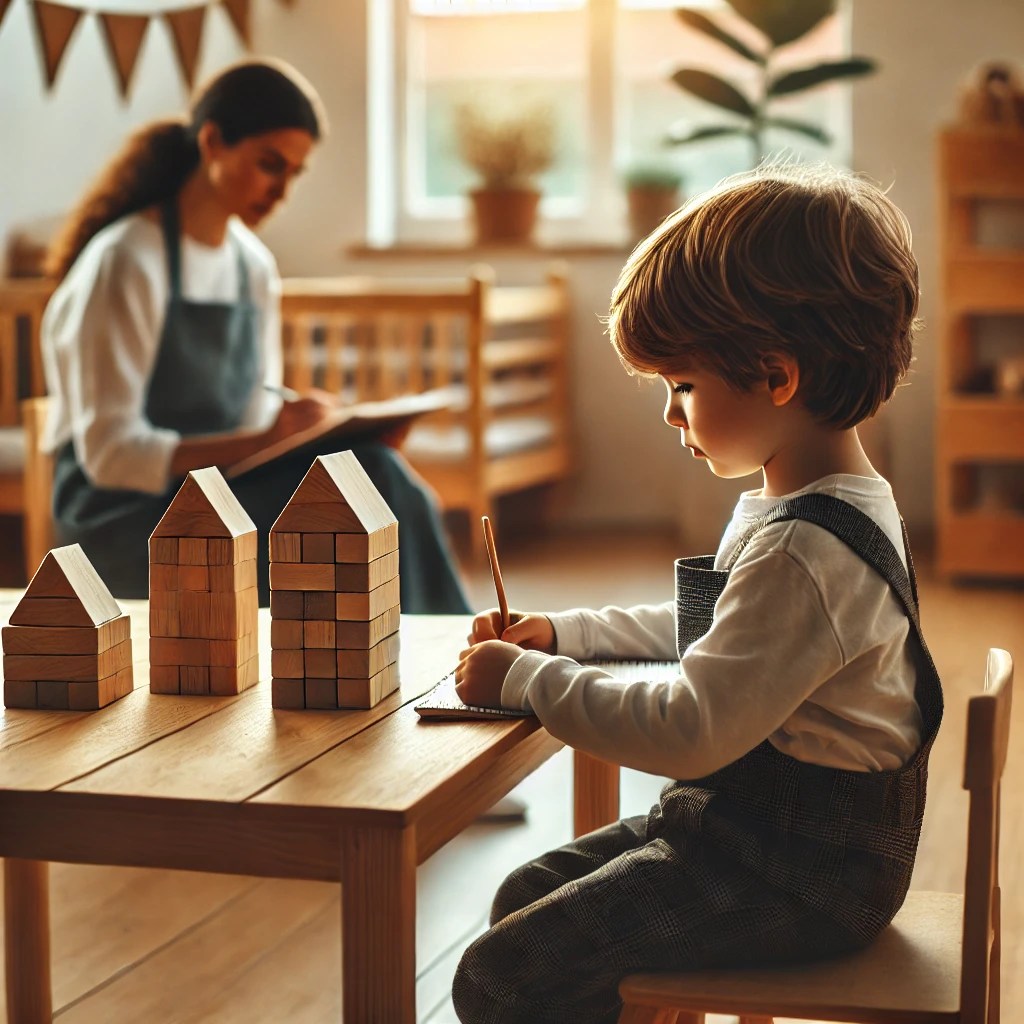
Intentional observation is the practice of mindfully and purposefully watching a child to understand their development, interests, and challenges. Unlike passive watching, intentional observation is a structured approach where we focus on how a child interacts with their environment, solves problems, and expresses emotions.
Maria Montessori emphasized that children reveal their strengths, needs, and learning preferences through natural interactions. By observing without interrupting, we can better support their independence, learning, and emotional growth.
Why Should We Observe?
Intentional observation helps you:
✅ Understand your child’s unique interests and skills – What do they enjoy? What challenges them? ✅ Identify learning styles – Do they prefer hands-on activities, listening, or visual learning? ✅ Support their independence – When we see what they are capable of, we know when to step back. ✅ Recognize emotional patterns – How do they handle frustration? How do they seek comfort? ✅ Create a prepared environment – Adjust activities and materials to fit their developmental needs.
By observing before intervening, we allow children to develop problem-solving skills, resilience, and confidence.
What Can We Observe?
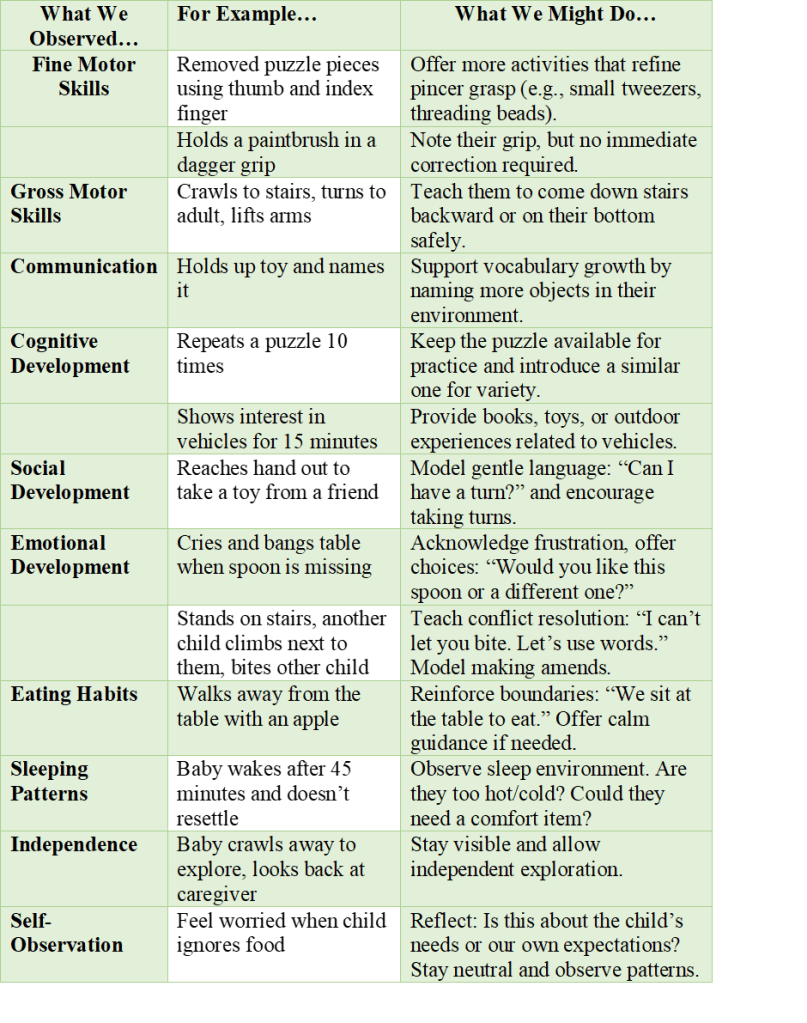
Here’s a list of key areas to observe in children:
How to Observe Your Child the Right Way:
Everyone is unique and every child is unique in special innocent ways. Your observation is the way you do. It always helps if we have a few basic templates to your methods, things you make sure that you do no matter what and they should be:
✅ Be Present, But Silent – Resist the urge to interrupt or direct. ✅ Watch Without Judgment – Observe what interests them, not what you expect. ✅ Take Notes – Document behaviors, patterns, and progress. ✅ Focus on Repeated Actions – If they do something repeatedly, it holds meaning for them. ✅ Observe Different Environments – Watch them in free play, structured activities, and social settings.
If you are noting all this in your mind, No offense!! Please Note them down on a paper or in the notes app on your mobile or as a doc on your Laptop. Trust me, It helps. Whatever you save could become a gift to your child. You can pass it down as Mom’s/Parent’s journal about your child. Best gift that they will cherish.
Observe little children, observe them anywhere you can.
-Dr. Maria Montessori, The 1946 London Lectures, p. 57
When we carefully watch little children—how they play, talk, and explore—we learn what interests them, what they need, and how they understand the world. This helps us guide them in a way that supports their natural curiosity and learning, just like how we notice when they need a hug or when they’re ready to try something new! 😊
What Can We Do With the Observations?
Once we gather insights, we can use them to support our child’s development in meaningful ways.
Intentional observation allows us to understand, support, and empower children in their natural growth. By watching without interfering, we let children explore, learn, and develop confidence in their abilities. 💡 Challenge: Take 10 minutes today to intentionally observe your child. What do you notice? How can you support them? Share your insights in the comments! 👇




Leave a comment